Harbor Forms New York Harbor
Harbor Forms

Marine materials,
cast for the built world.

We develop the material, solve the production, and deliver the installed piece — structural members and vessels made from marine feedstocks, for the urban infrastructure the energy transition is about to demand.
Materials · Moulds · Machines · Installations
Newtown Creek digester eggs, Greenpoint, Brooklyn — photograph by Andraz Naglic, 2016. CC BY-SA 4.0.
01The thesis

Most ventures solve one layer. The layers are the problem.

A marine biomaterial that performs in a lab does not become a seawall. A casting process that works at bench scale does not become a structural member. And a member nobody will permit does not get installed. Harbor Forms takes all three at once, because each one is what stalls the other two.

1
The material

Marine feedstock into structural matter

Alginates, biomineralised carbonates, kelp-derived carbon and shell aggregate — developed toward the properties a built object actually has to hold: compressive strength, water behaviour, freeze–thaw, service life.

2
The production

Heritage moldmaking, digitally driven

Casting is an old trade carrying deep tacit knowledge. We keep the craft and put a cyberphysical loop around it — digital form-finding, toolpathed moulds, instrumented cures, each pour informing the next.

3
The installation

Straight into infrastructure need

We go to the built condition rather than selling a pellet into someone else's supply chain — the member, the vessel, the revetment, delivered where the energy transition is putting pressure on the ground.

02What we make

Cast installations for a shoreline under load

The forms a climate-adapting waterfront needs are, structurally, a family of cast objects. That is convenient, because casting is what marine-derived composites are good at — they want to be poured, not extruded.

Structural members
Compression-dominant elements, where cast composites are strongest — piles, caps, revetment units, retaining and armour forms. Shaped so the load path and the mould are decided together rather than in sequence.
Vessels
Containment as architecture — tanks, digesters, cisterns, planters and bioreactor shells. The geometry that makes a vessel efficient also makes it a legible civic object; the eggs above are the standing proof that a city will accept one.
Edge and interface
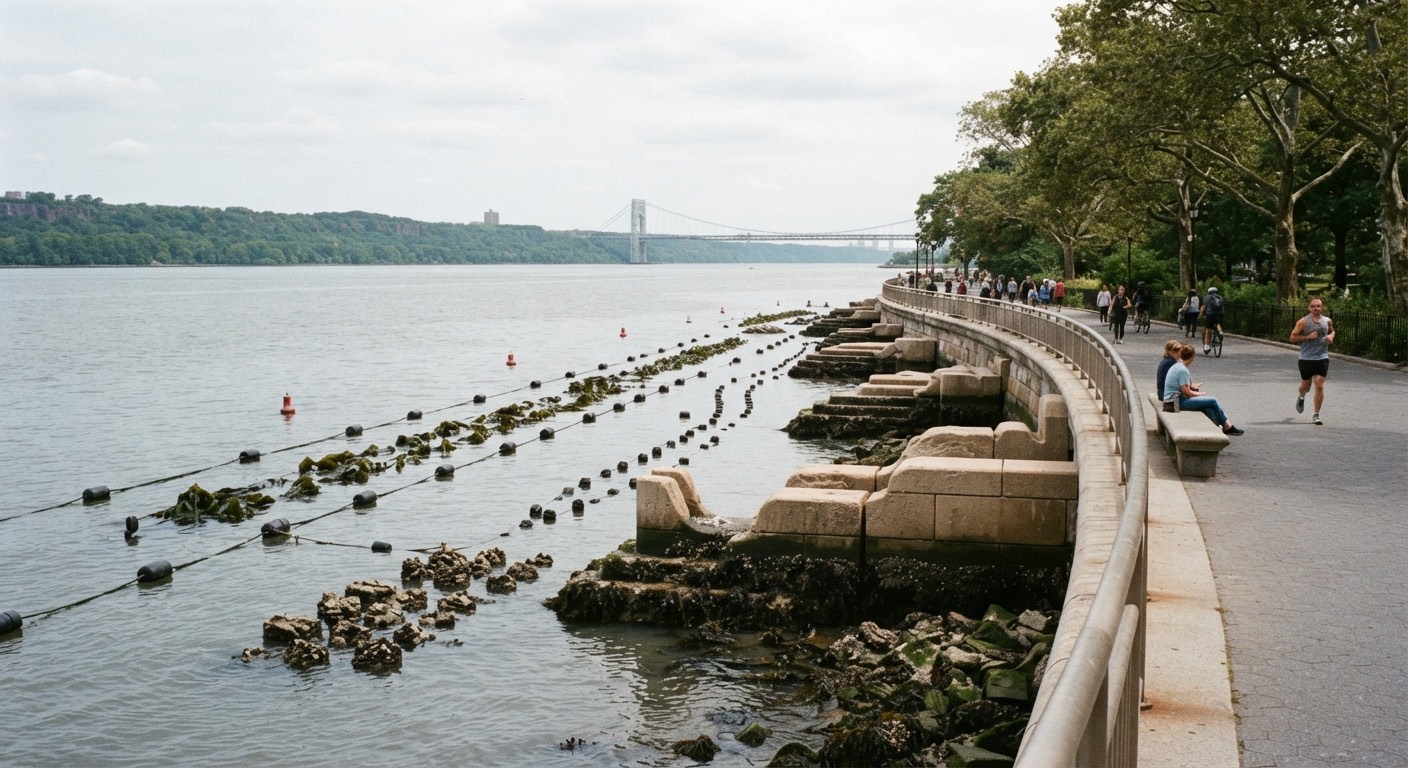
Where water meets the built world — bulkhead facings, living-shoreline modules, scour protection, tidal benches. Surfaces engineered to be colonised rather than merely to resist.
Infrastructure envelope
The unlovely necessities the transition multiplies — substation and switchgear enclosures, utility vaults, battery-storage housings. Cast, not clad.
03The specification nobody writes

Aesthetic compatibility is a functional requirement

Infrastructure a neighbourhood finds ugly does not get built — or gets built once and never again. When a substation enclosure or a shoreline module has to sit in a street of nineteenth-century warehouses and twentieth-century concrete, looking like it belongs is load-bearing: it is what clears community review, and what earns the second order.

We treat the urban vernacular as a spec line, not a finish applied at the end.

How Harbor Forms scopes a piece
Structurally effective Materially honest Vernacular-compatible Permittable Repairable
04Where it lands

Energy-transition geography is waterfront geography

The places absorbing the transition — interconnection points, storage siting, port electrification, offshore staging — are overwhelmingly the same places facing surge, subsidence and heat. New York Harbor is where those two maps overlap hardest, and it is where the feedstock grows.

Same map, twice
Working waterfronts carry both the grid build-out and the flood exposure. A material made in the harbour, for the harbour, shortens a supply chain that currently runs through several oceans.
Feedstock at the site
Marine biomass is grown, not mined, and it can be grown adjacent to where the casting happens — which is the difference between a low-carbon claim and a short haul.
Sequenced honestly
Non-structural and semi-structural pieces first, where a new material earns service history at low consequence. Primary structure only once the data says so.

The harbour can make what the harbour needs.

Harbor Forms · New York Harbor
hello@harborforms.com
Ground: “Digester eggs of the Newtown Creek Wastewater Treatment Plant,” Andraz Naglic, 2016, via Wikimedia Commons, licensed CC BY-SA 4.0. Harbor Forms is an early-stage venture; nothing on this page describes a completed installation.